
What ADHD burnout actually feels like
What ADHD burnout actually feels like
Here is something I never thought I would write. My ADHD burnout saved my life.
Two years ago, at age 36, I hit the most intense burnout I had ever experienced. I had been having burnouts for most of my adult life, but I didn’t know that was what they were. I thought I was unwell. I thought it was my mental health. I thought I was just exhausted from being… a person.
What I actually had was undiagnosed ADHD, a lifetime of masking and a nervous system that had been running at red for as long as I could remember.
The crash that came next put me in front of a psychiatrist who looked at me and said, “I think you have ADHD.” That single sentence rerouted my whole life.
So yes. My burnout saved my life. It is a strange thing to be grateful for. I am grateful anyway.
Contents
What ADHD Burnout Isn’t
ADHD burnout isn’t a long week at work, it isn’t tiredness, it isn’t a bad mood you can shake off with an early night and a green smoothie.
It is the cumulative cost of running a brain that doesn’t regulate the way other brains do, while pretending it does, sometimes for decades.
If you have ever wondered why you can be the most productive person in the room one month and unable to answer a text message the next, this might be why.
What It Actually Feels Like
I can only speak for myself, but every adult with ADHD I have spoken to since my diagnosis recognises some version of this.
It starts with the build. You take on too much because you can’t say no, because you are people pleasing, because you are masking, because the hyperfocus is on, because you genuinely don’t realise how much you are doing until you stop.
You overperform. You overcompensate. You skip meals, skip rest, take on what isn’t yours and keep going.
Then the crash arrives.
For me, the crash has looked like sleeping for eighteen hours straight. I once went on holiday to Croatia and fell into bed the moment we arrived. A hurricane rolled through while I slept. I missed it. Eighteen hours in, my body decided I had earned a brief return to consciousness.
The crash has looked like the light going out of my eyes. Quite literally, my husband can tell, my friends can tell. There is a flatness that lands on my face and stays there.
It has looked like cold sores blooming on my lip. Hair falling out in the shower. Illnesses I shouldn’t have caught arriving on cue. Skin breaking out. Stomach churning. My whole body announcing that it has had enough, in the only language it has.
It has looked like emotional shutdown. I can’t cry. I can’t talk. I can’t pretend to be okay. The mask, which has been doing its job beautifully for months, falls off in one piece and I can’t pick it back up.

The Lazy Myth
One of the cruelest parts of ADHD burnout is how it gets misread.
From the outside, it looks like you have stopped trying. You can’t reply to messages. You can’t keep up with admin. You can’t decide what to eat. You cancel plans you were excited about. You forget appointments you set for yourself.
People will call you lazy, flaky, dramatic, unreliable. You will tell yourself the same things, before your diagnosis and after and often hate yourself for it.
Here is what is actually happening. You are running on empty after years of running on overdraft. Your nervous system has shut down because it had to. Burnout is the bill arriving for the running you have been doing.
Why ADHD Brains Burn Out
ADHD brains don’t regulate dopamine, attention, energy, emotion or task-switching the way neurotypical brains do. Everything that comes easily to other people takes more from us. Replying to a text. Choosing what to wear. Deciding what to cook. Each one is a small cognitive bill.
On top of that, many of us mask. We hide the bits of our brains that don’t fit, perform the version that does and carry the difference internally. Masking is exhausting. It uses energy we don’t have, in service of looking like people we are not.
A lot of late-diagnosed women in particular have been doing this since childhood. I had no idea I was doing it until I started learning what ADHD actually was.
I wasn’t the kid bouncing off classroom walls. I was the quiet one at the back, leaning back on my chair, gripping the wooden table behind me, because I had taken the “knock on wood” superstition too literally and was convinced that if I didn’t hold on, my entire family would drop dead.
I do understand the irony now. The “good” quiet kid was doing more mental gymnastics than anyone in the room.
That kind of constant internal regulation, repeated for thirty plus years, leads to burnout. It would lead to burnout in anyone.
Emotional Dysregulation, the Silent Partner
The other piece of ADHD burnout that no one really warns you about is emotional dysregulation.
Rejection sensitivity goes through the roof. A neutral message gets read as a rejection. A delayed reply reads as a friendship ending. A vague tone from your manager reads as you’re about to be fired. The internal volume is unbearable.
Then you crash and the dysregulation gets louder. You cry at adverts, you snap at your partner, you feel emotionally raw and physically numb at the same time. You hate yourself for being like this and the self-loathing creates a fresh wave of dysregulation.
What you are feeling is a brain that has run out of the capacity to manage what it is holding. Once you understand it as that, you can stop fighting yourself quite so hard.
What I Do Differently Now
I am sharing what has worked for me, two years and one diagnosis in. Some of it may help. Some of it won’t. But that’s okay.
The first thing that changed was understanding. Having a name for the pattern meant I could see it coming. The build before the crash, the taking on too much, the skipping meals, the pushing through. I now know what those signals are and I can intervene earlier.
The second was medication and therapy. Therapy in particular has helped me work on rejection sensitivity, the pause before I react, the difference between reacting and absorbing.
The third was getting sober. Twenty years of self-medicating with alcohol was making everything harder, including my ability to rest.
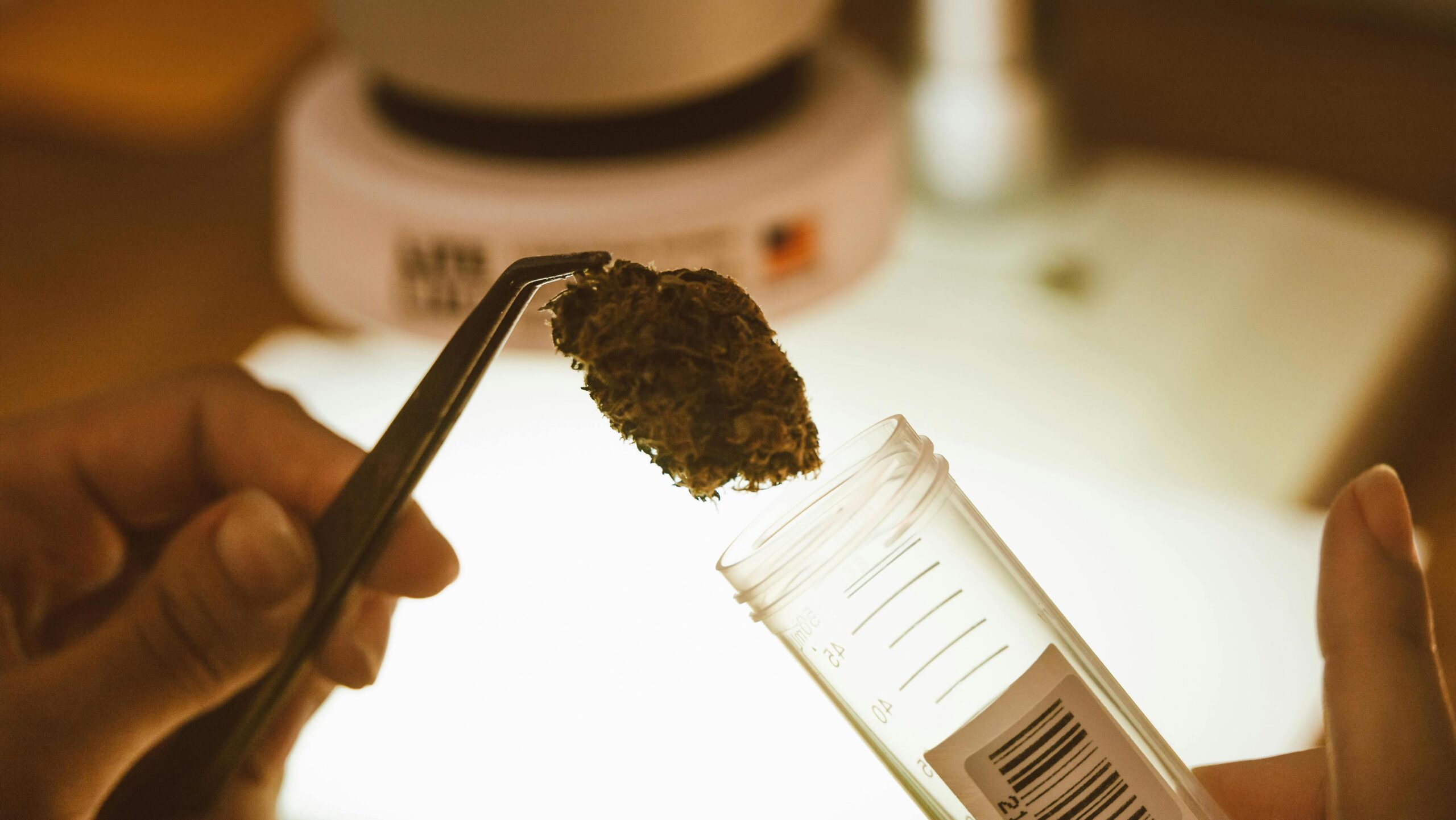
The fourth is medical cannabis. I take it under a specialist prescription from CB1 who are a regulated UK clinic. In the evenings, the calming effect of my prescribed strain helps quiet the brain noise that has built up across the day. The body untenses. My shoulders, which I didn’t even know I was holding up around my ears, drop. The mental volume drops with them. I get to step out of my own head for a while, which for an ADHD brain is rare and valuable.
What surprised me most is that it doesn’t sedate me. It settles me. It is the difference between being knocked out by a glass of wine, which I used to lean on and actually resting. I can still think, I can still talk, I just stop running.
It isn’t magic, It isn’t a cure, It is one part of a wider picture, alongside the diagnosis, the medication, the therapy, the sobriety, the boundaries, the saying no, the actually resting.
But I haven’t had a burnout like that one since.
Where Medical Cannabis Fits in the Bigger Picture
The two active compounds people most often hear about are CBD and THC. Both interact with something called the endocannabinoid system, a network of receptors in the body that helps regulate sleep, mood, pain, appetite and stress responses. For ADHD-related symptoms like sleep disruption, anxiety, restlessness and the brain noise so many of us know intimately, that interaction can sometimes settle things in a way that other approaches haven’t.
I want to be clear. Medical cannabis is not a treatment for ADHD itself. It is something that can be discussed as part of specialist care for associated symptoms, when other approaches haven’t given enough benefit. For some patients, it forms part of a wider treatment plan. For others, it isn’t the right fit. The only way to know is a proper assessment with a specialist clinic that takes a full medical history.
Signs Your Overwhelm Might Be ADHD Burnout
This list is suggestive, not diagnostic. If any of it sounds familiar, that is information worth taking to a specialist.
- You can be wildly productive and then unable to function for weeks afterwards.
- You take on too much, then crash, then promise yourself you’ll never do it again, then do it again.
- Your body holds the stress in visible ways. Skin, hair, gut, sleep, immunity.
- You mask in social and professional settings, and the cost lands in private.
- Small admin feels impossibly heavy when you are crashing.
- Rejection sensitivity is loud, sometimes louder than the actual situation.
- You have been told you have “wasted potential”, “could try harder”, or “have so much going on” by people who couldn’t see the internal workload.
FAQs
What Does ADHD Burnout Actually Feel Like?
People often describe a cycle of overcommitting, masking and pushing through, followed by a crash that affects the body, the emotions and the ability to function. Common features include long shutdowns, emotional dysregulation, physical symptoms like skin and hair changes, and difficulty with basic tasks. It tends to be more total than ordinary tiredness.
Is ADHD Burnout Different From Regular Burnout?
There is overlap, but adults with ADHD often describe a recurring pattern linked to masking, overcommitting and difficulty regulating dopamine and emotion. The cycle can repeat throughout life, particularly when ADHD is undiagnosed.
Can ADHD Burnout Be a Sign of Undiagnosed ADHD in Adults?
For some adults, yes. Many people report that severe or recurrent burnout was what led them to seek a specialist assessment. A diagnosis can help make sense of patterns that have been there for years.
Can Medical Cannabis Help With ADHD Burnout and Overwhelm?
Some patients report that medical cannabis, prescribed as part of specialist care, helps with the brain noise, sleep and rest that ADHD burnout disrupts. Outcomes vary, and it should only be considered through a properly regulated specialist clinic.
How Do You Get Medical Cannabis on Prescription in the UK?
Medical cannabis is prescribed by specialist consultants registered with the General Medical Council. The pathway usually starts with an eligibility check, followed by a consultation with a specialist, a clinical team review, and if appropriate, a prescription dispensed through a regulated pharmacy. It is not the same as over-the-counter CBD and should always go through a properly regulated clinic.
If you are exploring whether medical cannabis might be part of your specialist care, the team at CB1 Medical can talk you through what an assessment involves. We see a lot of adults whose path to us started with a burnout that finally made them ask, what is actually going on here.
If you are struggling right now and need support, the Samaritans are available 24 hours a day on 116 123 in the UK. Your GP is also a good first step.
Curious if you’re eligible?
Try our free eligibility checker to see if medical cannabis is right for you.