Medical Cannabis and Driving: What You Need to Know
Medical Cannabis and Driving: What You Need to Know
If you’re prescribed medical cannabis and drive, you may have questions about what the law actually allows. Can you still drive? What happens if a roadside drug test detects THC? And does having a prescription protect you if you’re stopped by the police?
The most important rule is simple: having a medical cannabis prescription does not automatically stop you from driving, but you must never drive while impaired. This guide explains the UK rules, THC blood limits, the statutory medical defence and what medical cannabis patients should know before getting behind the wheel.
Contents
Can You Drive With a Medical Cannabis Prescription?
Yes. A medical cannabis prescription does not automatically prevent you from driving.
However, it is illegal to drive if your medication makes you unfit to drive safely. THC can affect concentration, coordination, judgement and reaction time, particularly when you first start treatment or after your dose or medication changes.
The Highway Code states that you must not drive under the influence of drugs or medicines when they impair your ability to drive.
So the question is not simply whether THC is present in your body. You also need to consider how your medication is affecting you at that moment.
What Is the Legal THC Driving Limit?
In England, Wales and Scotland, the specified blood limit for delta-9-THC when driving is 2 micrograms per litre of blood (2 µg/L).
This is a very low threshold. THC was placed within the group of controlled drugs for which the limit was designed around a near-zero-tolerance approach rather than a concentration intended to represent the point at which every person becomes impaired.
This creates an important distinction for prescribed patients:
- Being above the specified THC blood limit is one legal issue.
- Being impaired and unable to drive safely is another.
THC can remain detectable after its more noticeable effects have worn off, particularly in people who use THC-containing medicines regularly. This is one reason prescribed patients may be able to rely on a statutory medical defence in certain circumstances.
Will Medical Cannabis Show Up on a Roadside Drug Test?
It can. Police roadside drug screening devices can test saliva for cannabis.
The roadside test detects the presence of drugs; it does not determine whether the cannabis came from a legal medical prescription or an illegal source.
A positive roadside result may therefore occur even when you are a legal medical cannabis patient.
If further investigation is required, an evidential blood sample may be taken to measure the concentration of THC. Having a valid prescription is therefore important when explaining why THC may legally be present in your system.
What Is the Medical Defence?
Drug-driving law includes a statutory medical defence for certain prescribed medicines.
In England, Wales and Scotland, the defence may apply when:
- The medicine was lawfully prescribed or supplied for medical purposes.
- You took it in line with the instructions given by your prescriber or supplier.
- You followed any accompanying written instructions that were consistent with your clinician’s advice.
This means a patient taking prescribed THC may potentially have a defence if their blood THC concentration is above the specified limit.
The medical defence does not allow you to drive while impaired. There is a separate offence of driving while unfit through drugs, and the medical defence does not apply to that offence.
You can read the government’s full drug-driving guidance for prescribed medicines for more detail.
What Happens If the Police Stop You?
If you’re stopped and the police suspect drug use or impairment, they can ask you to complete a roadside drug screen or a field impairment assessment.
If you are prescribed medical cannabis, tell the officer that your THC-containing medication has been legally prescribed. You may also be asked to provide evidence.
Depending on the circumstances, the police may carry out further checks or require an evidential blood test.
A prescription does not prevent the police from investigating suspected drug driving. It provides important evidence explaining why THC may legally be present and may support the statutory medical defence where its conditions are met.
What Proof Should You Carry?
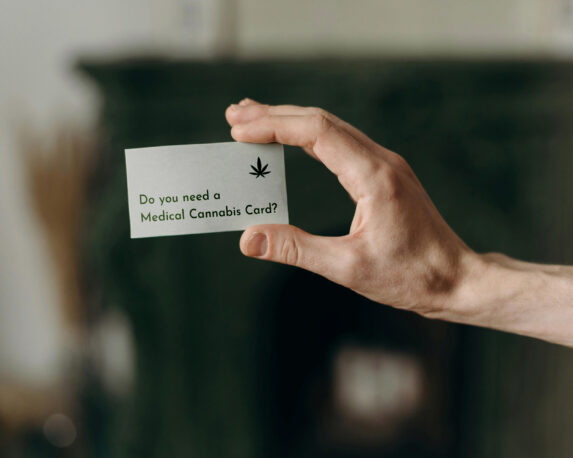
There is no government-issued medical cannabis card that you must carry in order to drive.
Government guidance does, however, say it can be helpful for patients taking controlled medicines to carry suitable evidence showing that the medicine has been prescribed.
For a medical cannabis patient, useful evidence can include:
- A digital or physical copy of your prescription.
- Your medication in its original pharmacy-labelled packaging.
- Valid photo identification that matches the name on your prescription.
You do not need a separate cannabis card to prove that you are a legal patient.
Read our full guide to whether UK patients need a medical cannabis card.
Do You Need to Tell the DVLA?
You do not normally need to tell the DVLA simply because you have been prescribed medical cannabis.
The important question is whether your medical condition itself is one that must be reported because it could affect your ability to drive safely.
Some conditions have specific DVLA reporting requirements. If you are unsure whether your diagnosis needs to be declared, check the current DVLA guidance on medical conditions and driving or ask the healthcare professional treating you.
The same principle applies to other prescribed medicines: taking medication is not automatically the same as having a notifiable medical condition.
How Long Should You Wait Before Driving?
There is no single number of hours that guarantees it is safe or legal to drive after taking medical cannabis.
How long THC affects someone can vary according to factors such as:
- The dose and strength of the medication.
- The formulation and how it is taken.
- How frequently you use THC-containing medication.
- Your individual metabolism and sensitivity.
- Other medicines or substances taken at the same time.
The UK Government specifically states that it cannot provide guidance translating a particular dose into a predictable blood THC concentration because there are too many individual variables.
You should be especially cautious when starting medical cannabis, increasing your dose, changing formulation or switching products.
If you feel drowsy, dizzy, confused, intoxicated, unable to concentrate or otherwise different in a way that could affect safe driving, do not drive.
Can You Carry Medical Cannabis in Your Car?
Yes. If your medical cannabis has been legally prescribed to you, you can carry your medication with you in your vehicle.
It is sensible to:
- Keep your medication in its original pharmacy-labelled packaging.
- Carry a copy of your prescription.
- Have suitable identification available.
- Store the medication securely and out of reach of children or other people.
If you’re taking your medication outside the UK, different rules apply. Read our guide to travelling with medical cannabis before travelling abroad.
What Can Increase the Risk of Impairment?
Several factors can make an impairing medicine more likely to affect your driving.
Government guidance highlights situations including:
- Starting or restarting a medicine that makes you sleepy.
- Adding another medicine that can also impair driving.
- Taking over-the-counter medicines that cause drowsiness.
- Changes in health that alter how your body responds to medication.
- Drinking alcohol alongside an impairing medicine.
Alcohol is particularly important. Combining alcohol with medicines that affect the central nervous system can increase impairment and road-safety risk.
If your treatment changes and you are unsure whether you should drive, speak to your CB1 Medical clinician before getting behind the wheel.
Does the Same Law Apply Across the UK?
The basic principle is the same throughout the UK: you must not drive while impaired by drugs or medicines.
However, the specific drug-driving framework differs slightly between jurisdictions.
England, Wales and Scotland have a specified THC blood limit of 2 µg/L and provide a statutory medical defence for medicines lawfully prescribed and taken according to instructions.
Northern Ireland currently uses a different drug-driving framework centred on whether a driver is impaired. Police can use roadside testing and field impairment assessments where drug driving is suspected.
Patients in Northern Ireland should follow current nidirect drug-driving guidance and seek individual advice if unsure.
FAQs
Can I Drive if I’m Prescribed Medical Cannabis?
Yes, provided your medication is not making you unfit to drive. A prescription does not give permission to drive while impaired. If you experience drowsiness, dizziness, reduced concentration or other effects that could make driving unsafe, do not drive.
Can I Fail a Drug Test Even With a Prescription?
Yes. A roadside cannabis test detects THC; it does not determine whether the THC came from a legal prescription. Your prescription may be important evidence if further investigation takes place.
What Is the THC Driving Limit in the UK?
In England, Wales and Scotland, the specified blood limit for THC is 2 micrograms per litre of blood. Northern Ireland currently operates under a different drug-driving framework.
Does Being Over the THC Limit Mean I’m Impaired?
Not necessarily. Blood THC concentration and impairment do not always correspond directly, particularly in people who use cannabis frequently. However, being above the specified limit can still trigger the drug-driving offence, which is why the statutory medical defence is important for legally prescribed patients.
Does a Prescription Automatically Protect Me?
No. A valid prescription may support the statutory medical defence to the specified-limit offence when the medicine has been taken as directed. It does not provide a defence to driving while genuinely impaired.
Do I Need a Medical Cannabis Card for the Police?
No. There is no official UK medical cannabis card required by law. A copy of your prescription, original pharmacy-labelled medication and identification are more useful evidence of lawful possession and treatment.
Should I Tell My Employer if I Drive for Work?
Your employer may have its own medication, drug-testing or occupational driving policies. If driving is an important part of your job, check your workplace policy and discuss any concerns with your clinician and employer where appropriate.
Final Thoughts
Medical cannabis patients can drive, but the responsibility to drive safely remains exactly the same as it does with any other potentially impairing medicine.
If THC is legally prescribed and taken according to your clinician’s instructions, a statutory medical defence may apply if your blood THC level is above the specified limit in England, Wales or Scotland.
That defence does not protect impaired driving. If your medication is affecting your concentration, reactions, coordination or judgement, do not drive.
At CB1 Medical, your clinician can discuss driving alongside your treatment plan and help you understand how medication changes may affect your day-to-day activities.
Curious if You’re Eligible?
If you have a long-term condition and have already tried recognised treatments, use our free eligibility checker to see whether taking the next step with CB1 Medical could be appropriate for you.